
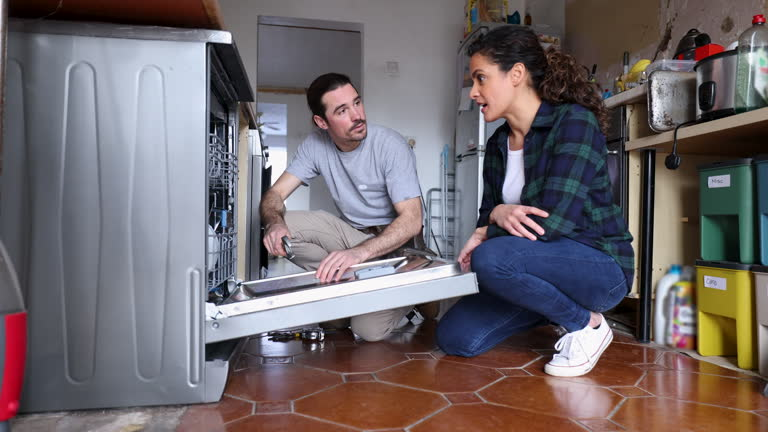
Let’s be honest about something. The dishwasher is one of those appliances that completely changes how a kitchen functions — and you don’t fully appreciate how much until the day it stops working properly.
Suddenly the sink is full of dishes again. The after-dinner cleanup that used to take ten minutes is taking forty. And somewhere between scrubbing the third pot by hand and realizing you haven’t done this routinely in years, the urgency of getting the dishwasher fixed becomes very clear very quickly.
The good news is that most dishwasher problems are fixable. The better news is that understanding what’s actually wrong — and knowing when to call professional appliance technicians rather than attempting a fix yourself — makes the whole process significantly less stressful and usually more economical than most homeowners expect.
This guide walks you through the most common dishwasher problems, what they mean, and how to think clearly about dishwasher repair before you make any decisions.

Reading the Signs — What Your Dishwasher Is Trying to Tell You
Dishwashers communicate problems in fairly consistent ways once you know what to look for. The specific symptom you’re experiencing points directly toward the underlying issue — which is genuinely useful information whether you’re attempting a basic fix yourself or explaining the situation to a technician.
Dishes coming out dirty or with residue. This is one of the most common complaints and has several possible causes. A clogged spray arm — the rotating component that distributes water throughout the wash cycle — is often the culprit. Mineral buildup from hard water can block the spray holes over time, reducing cleaning performance gradually enough that you don’t notice until the dishes are consistently disappointing. A failing wash pump or worn-out spray arm bearings can produce similar symptoms. Checking and cleaning the spray arms is a legitimate DIY starting point.
Water not draining after the cycle. Standing water at the bottom of the dishwasher after a completed cycle is both unpleasant and genuinely concerning. The most common cause is a clogged filter or drain hose — both of which are worth checking yourself before calling anyone. The filter sits at the bottom of the dishwasher tub and collects food debris — it needs regular cleaning that most owners skip entirely. If the filter is clear and drainage is still poor, the drain pump may be failing, which is a dishwasher repair that warrants professional diagnosis.
The dishwasher is leaking. Water on the floor around your dishwasher demands immediate attention — not because the fix is necessarily complicated, but because water damage to flooring and cabinetry compounds quickly if it’s ignored. Leaks can come from a worn door gasket, a loose or damaged inlet hose, a failing pump seal, or a cracked tub. Door gasket replacement is manageable for a confident DIYer. Anything involving the pump or internal water connections is worth handing to professional appliance technicians who can diagnose accurately without creating additional water damage in the process.
It’s making noises it never used to make. A dishwasher that’s suddenly grinding, rattling, or thumping during its cycle is telling you that something mechanical is unhappy. Grinding sounds often indicate debris in the pump or a worn pump bearing. Rattling can be dishes that aren’t loaded correctly or a spray arm that’s hitting something. Thumping or banging during the wash cycle can indicate a failing motor or pump. The difference between these sounds matters a lot for diagnosis — and this is an area where professional eyes and ears genuinely help.
The dishwasher won’t start at all. Before assuming something significant has failed, check the basics. Is the door latched completely? Dishwashers won’t start if the door latch isn’t fully engaged — and the latch mechanism itself can fail, preventing the machine from recognizing that the door is closed. Check the control panel for error codes if your model displays them. If the door latch checks out and the control panel shows nothing useful, you may be dealing with a control board issue or a wiring problem that needs professional diagnosis.
Dishes aren’t getting hot or dry properly. A dishwasher that cleans but doesn’t dry effectively, or that runs cold water through the cycle, likely has a heating element issue. The heating element serves double duty in most dishwashers — heating the water during the wash cycle and heating the air during the drying cycle. A failed heating element affects both functions and is a repair that professional appliance technicians handle routinely.
When DIY Makes Sense — and When It Doesn’t
There’s a genuinely useful line between dishwasher issues that confident homeowners can address themselves and ones that really need professional expertise. Understanding where that line is saves you money when DIY is appropriate and saves you from making things worse when it isn’t.
Reasonable DIY territory includes: cleaning the filter, clearing a clogged spray arm, replacing a worn door gasket, clearing a simple drain hose blockage, and checking door latch alignment. These fixes are accessible, require basic tools, and carry low risk of creating additional problems if approached carefully.
Call professional appliance technicians for: anything involving the pump, the motor, the control board, internal wiring, the water inlet valve, or any repair where water damage risk is present. These components require accurate diagnosis before replacement, involve electrical systems that carry real risk if handled incorrectly, and benefit significantly from the experience of someone who has seen the same failure multiple times and knows exactly what’s causing it.
The honest calculus is this: DIY is appropriate when the fix is genuinely accessible and the downside of getting it wrong is minimal. Professional repair is appropriate when the diagnosis is uncertain, the components involved are complex, or the consequences of an incorrect repair are significant.
What Makes Professional Appliance Technicians Worth Calling
There’s a version of the professional repair conversation that focuses entirely on what technicians can do that homeowners can’t. That’s a real part of the answer — but it’s not the most important part.
The most important thing professional appliance technicians bring to a dishwasher repair isn’t just technical capability. It’s accurate diagnosis. The difference between a dishwasher that drains slowly because of a clogged filter and one that drains slowly because of a failing drain pump looks similar from the outside and requires completely different interventions. Getting the diagnosis wrong means paying for a repair that doesn’t fix the problem — and then paying again when the actual issue finally gets identified.
Experienced technicians have seen the same problems dozens of times on the same models. They know which symptoms point where. They know which brands have common failure patterns. They know when a repair is straightforward and when it’s likely to reveal additional issues that need to be addressed at the same time. That accumulated experience is what makes professional diagnosis genuinely valuable rather than simply convenient.