

Dust builds up in a duct system whether anyone notices or not. Most homeowners don’t think about it until the air coming out of the vents smells stale, or a family member starts sneezing every time the AC kicks on. That’s usually the first sign it’s time for a ventilation cleaning — and most people have no idea what actually happens once the technician shows up.
I’ve walked through dozens of these jobs, and the process is more involved than a quick vacuum-and-go. A real ventilation cleaning service touches every part of the airflow path, not just the parts you can see. Here’s what’s actually included, section by section.
The Initial Inspection Comes First
No technician should touch a duct system blind. Before any cleaning starts, a proper crew inspects the entire network — supply lines, return lines, the plenum, and every register in the house.
They’re checking for mold. For pest activity. For loose connections that leak air (and money) every month.
Some companies use a camera on a flexible rod to look deep into runs that aren’t accessible by hand. This step matters because it tells the crew exactly how bad the buildup is, and whether there’s a bigger issue hiding — like a rodent nest three feet into a return duct, which I’ve personally seen more than once.
Supply and Return Duct Cleaning
This is the core of the job. Technicians use high-powered vacuums connected directly to the duct system, paired with agitation tools — brushes, air whips, or compressed air nozzles — that knock loose dust and debris stuck to the interior walls.
The vacuum runs the whole time, pulling contaminants out before they can resettle somewhere else in the house.
A full duct cleaning covers:
- Main supply trunk lines running from the furnace or air handler
- Branch ducts feeding individual rooms
- Return air ducts pulling air back to the system
- Boots and register openings where dust collects the thickest
Skipping any one of these leaves a weak link. Dust in an untouched branch duct just gets pulled back through the system days later.
Cleaning the HVAC Unit Itself
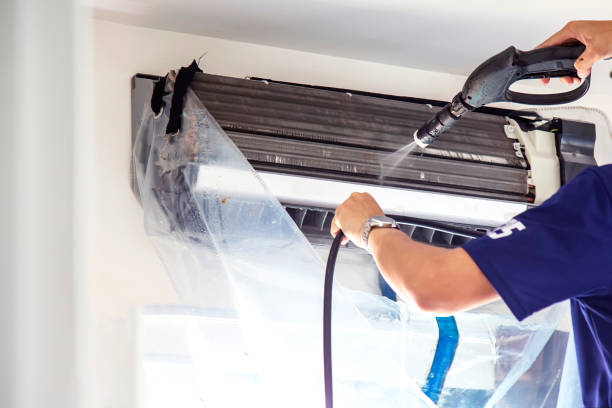
A lot of companies clean the ducts and completely ignore the equipment driving the airflow. That’s a mistake, because the blower fan, coils, and drip pan inside the unit collect just as much grime as the ductwork — sometimes more.
A thorough ventilation cleaning includes the blower motor and fan blades, the evaporator coil, and the condensate drain pan. Dirty coils force the system to work harder, which drives up energy bills. I’ve seen homeowners cut their cooling costs noticeably just from a coil cleaning alone, no other changes made.
Sanitization and Antimicrobial Treatment
After the physical debris is removed, most reputable services apply an EPA-registered antimicrobial treatment inside the ducts. This step targets mold spores, bacteria, and lingering odors that a vacuum alone can’t fully address.
It’s not always included by default. Some companies charge extra for it, so ask upfront. For homes with allergy sufferers or anyone with respiratory sensitivity, this step isn’t optional — it’s the difference between removing visible dust and actually improving what you breathe.
Dryer Vent Cleaning (Often Bundled In)
Plenty of ventilation cleaning companies bundle dryer vent service into the same visit, and for good reason — a clogged dryer vent is a genuine fire hazard, not just an efficiency issue.
Technicians clear lint buildup from the vent line running from the dryer to the exterior wall. This single service prevents a huge share of house fires reported every year, and it takes maybe twenty extra minutes on a standard job.
Sealing and Minor Repairs
During inspection, techs often find gaps, disconnected joints, or damaged sections of ductwork. Sealing leaks with mastic or metal tape is a small add-on that pays for itself — a leaky duct system can waste 20-30% of conditioned air before it ever reaches a vent.
Not every ventilation cleaning package includes repairs in the base price. Get this in writing before the job starts, because “cleaning” and “repair” often get billed as separate line items.
Post-Cleaning Inspection and Documentation
A good crew doesn’t just pack up and leave. The final step is a walk-through — checking airflow at each register, confirming there’s no leftover debris, and often providing before-and-after photos.
This documentation matters more than people realize, especially for anyone tracking maintenance for a home sale or insurance purposes down the line.
What to Ask Before Booking
Before signing off on any quote, confirm exactly what’s covered. Companies vary wildly on this. Ask whether the price includes the HVAC unit itself, the antimicrobial treatment, dryer vent service, and any duct sealing — because “ventilation cleaning” means something different depending on who you call.
Conclusion
A ventilation cleaning service that only vacuums the visible ductwork is doing half the job. The full package covers inspection, duct cleaning, HVAC unit cleaning, sanitization, dryer vent clearing, and sealing, with documentation to prove the work happened. Before you book, get a line-item breakdown of what’s included. If a company can’t tell you clearly, that’s worth noting before you hand over a deposit.